
As anyone working in risk management knows, fragmented or siloed risk management can leave organizations vulnerable to uncertainties in this world of ever-evolving risks. Manual processes, disconnected systems, and information silos hinder effective risk mitigation. The solution: investing in an integrated risk management platform. By leveraging technology that centralizes and shares data across critical risk functions, organizations are empowered to proactively identify, assess, and mitigate risks across the enterprise.
In their Audit of Integrated Risk Management (IRM), the Government of Canada’s Treasury Board emphasizes that risk management cannot be effectively practiced in silos. Instead, they recommend an integrated approach to risk management, stating, “Integrated risk management promotes a continuous, proactive, and systematic process to understand, manage, and communicate risk from an organization-wide perspective cohesively and consistently.”
This unified approach involves continuous risk assessments at every level of the organization, aggregating the results and using them to inform decision-making and business practices. Let’s explore the powerful benefits of integrated GRC software and how it can revolutionize your practices.
Discover Resolver's solutions.
What are the top 5 benefits of an integrated risk management platform?
Integrated GRC software offers numerous benefits that empower organizations to navigate risks effectively and make data-informed decisions while maturing their GRC discipline. By connecting Risk, Compliance, and Audit and leveraging data-driven insights, organizations can achieve resilience and agility in the face of uncertainty. According to a 2023 report on the importance of integrated risk management by practitioners at Deloitte, integrated risk management allows organizations to succeed even under adverse market conditions by relying on up-to-date risk information for agile and data-driven decision-making.
1. Proactive risk management and strategic decision-making
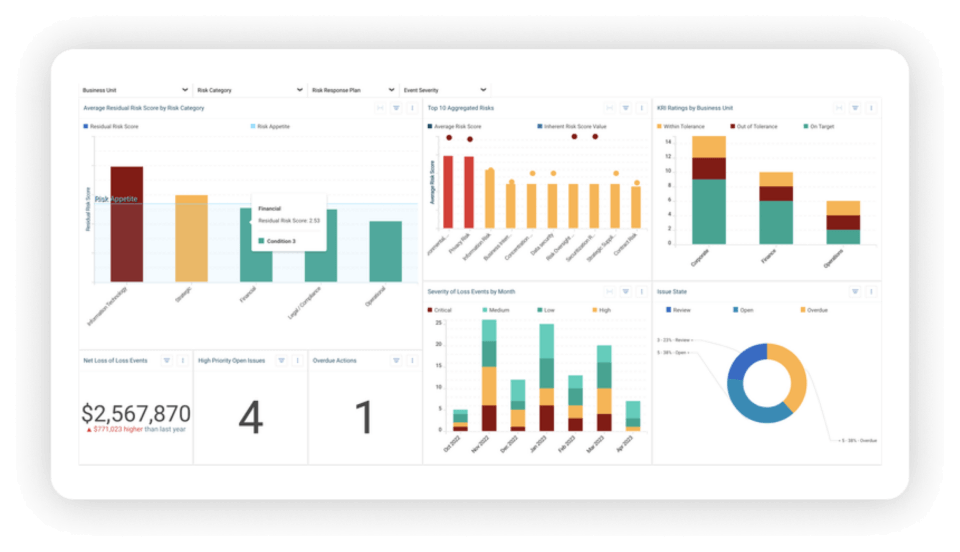
An integrated risk management platform provides organizations with real-time, data-driven insights that enable proactive risk management. “The more integrated the framework is,” say the authors, “the more it becomes self-optimizing where outcomes are predicted based on transparent, business value-driven insight rather than reactive remediation based on outdated information, fraud, or error.” This proactive approach helps organizations anticipate and mitigate risks before they escalate, enhancing overall decision-making processes.
Centralizing and aggregating risks, controls, issues, and action data across siloed business units offers leadership a comprehensive view of their overall risk posture to make better-informed strategic decisions. Further, by understanding the interconnectedness of risks and their potential impact on business objectives, executives can develop proactive risk-informed strategies and allocate resources more productively.
2. Enhanced compliance and regulatory reporting
Effective governance and compliance are critical for organizations to meet regulatory requirements and stakeholder expectations. Integrated GRC solutions are equipped to align risk management efforts with relevant regulatory requirements and industry standards. These solutions streamline compliance workflows, track compliance status, and generate audit-ready reports. These capabilities ensure that the organization meets its regulatory obligations and can demonstrate compliance to stakeholders. Organizations can also strengthen their governance framework and effectively manage risks by unifying Risk, Compliance, and Audit into one connected platform.
3. Improved communication and collaboration
With an integrated risk management platform, you can unify different GRC functions such as compliance, cybersecurity, incident management, internal audit, and third-party risk into a single solution. This consolidation streamlines and automates risk assessments, reporting, and communication, fostering better collaboration between teams and stakeholders. Implementing a comprehensive integrated GRC solution eliminates data silos, reduces duplication of efforts, and enhances overall operational efficiency.
Read more: The Beginner’s Guide to Finding the Best Risk Management Software
4. Business resiliency
Integrated GRC software plays a crucial role in enhancing business resiliency. It enables organizations to succeed despite adverse market conditions by relying on up-to-date risk information for agile and data-driven decision-making.
“By combining past, present, and future-oriented (internal and external) risk data throughout the organization’s three lines of defense,” said the authors, “IRM acts as the connecting tissue bringing together all relevant elements that allow informed decision-making to remain in control of the organization’s direction of travel.” With this kind of risk intelligence, organizations can better predict outcomes based on transparent, business value-driven insights, fostering resilience and mitigating the impact of uncertainties.
5. Improved operational efficiency and engagement
Investing in integrated GRC software allows you to facilitate seamless communication and collaboration among stakeholders involved in GRC processes. By providing a centralized platform, teams can easily share information, track risk-related activities, and collaborate on risk mitigation efforts. These capabilities enhance transparency, promote cross-functional collaboration, and cultivate a risk-aware culture across the organization.
By leveraging integrated GRC solutions, organizations strengthen the collaboration between Risk, Compliance, Audit, and the first line of defense. The platform facilitates collaborative risk identification and assessments, simplifies risk reporting, and aids in tracking and promptly managing reported issues. This encourages cross-functional discussions on risks, potential impacts, and appropriate responses.
How Resolver’s integrated GRC platform offers tangible risk intelligence
Whether you’re a small business or a multinational corporation, the benefits of integrated GRC software are undeniable. It’s time to stop juggling siloed tools and experience the transformative power of a unified platform.
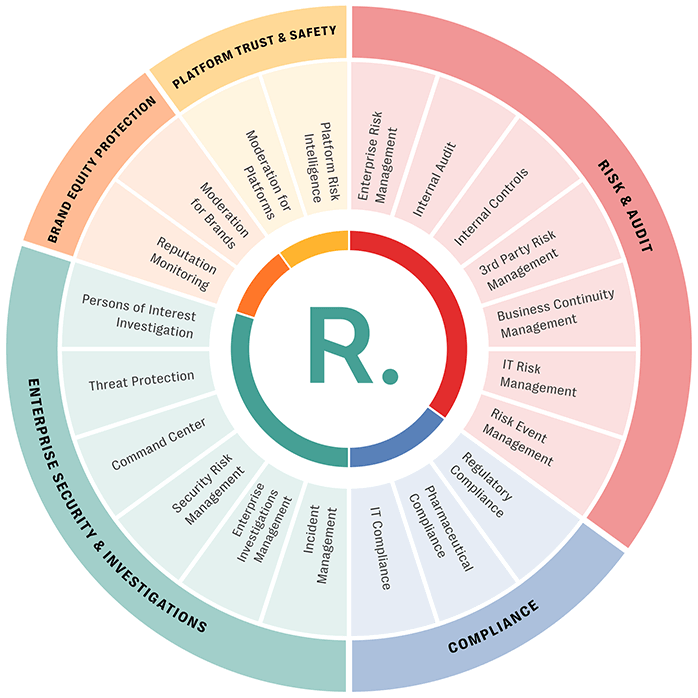
Resolver’s Integrated GRC solution offers a comprehensive solution that seamlessly streamlines multiple GRC approaches into one. With Resolver, all Risk, Compliance, and Audit data seamlessly consolidate within a single, secure database, resulting in a wealth of centralized data. This data can then be analyzed in context, fostering a comprehensive understanding that goes beyond isolated fragments.
By consolidating all aspects of GRC under one platform, your organization achieves a better risk profile through increased visibility and consistency, leading to a substantial boost in the ROI of GRC software. Embrace this simplified and connected GRC approach—cut duplication, surface insights, and make smarter decisions, faster.
See Resolver’s fully integrated GRC tool in action and highlight the transformative power of an integrated risk management platform. Contact our team today and book a demo customized to your organization’s unique needs.
